Microplastics Evidence Review
Microplastics: What the Evidence Actually Shows
Detection is not danger. Particle counts are not risk. Headlines are not proof.
The Microplastics Evidence Review is an independent scientific review of microplastics, exposure, toxicology, detection methods, and real-world human health risk.
Decades of scientific studies show no evidence of any human health effects from normal real-world exposure to common plastic particles.
Why this review matters
Microplastics are widely reported in air, water, food, dust, and biological samples. Those findings deserve careful scientific evaluation. But detection alone does not prove toxicity, accumulation, disease, or human health risk.
The relevant question is not simply: can a plastic particle be detected?
The real question
Was the particle actually proven to be plastic, was the dose realistic, and was harm demonstrated?
This review examines those questions using peer-reviewed evidence, exposure estimates, toxicology, particle science, analytical-method quality, mass balance, and real-world risk assessment.
Five findings that change the microplastics debate
1. Detection is not evidence of harm
Finding a particle, polymer-associated signal, or plastic-like fragment does not prove disease, toxicity, accumulation, or causation.
2. Dose matters
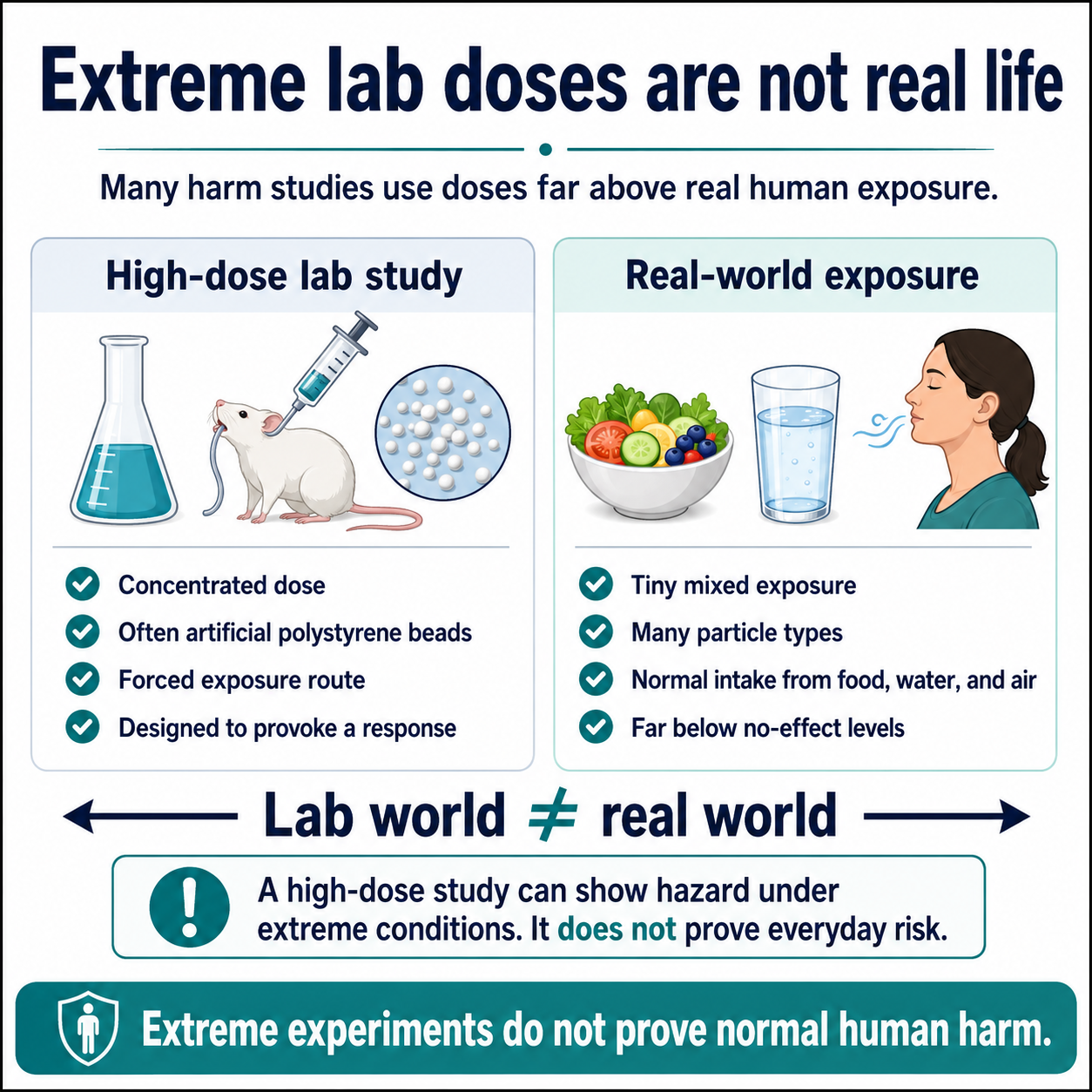
Many alarming studies use exposure levels, particles, or experimental conditions far removed from realistic human exposure.
3. Method quality matters
Dye staining, weak spectral matches, indirect chemical signals, poor contamination controls, and unsuitable particle-identification methods can overstate what has actually been proven.
4. Mass matters
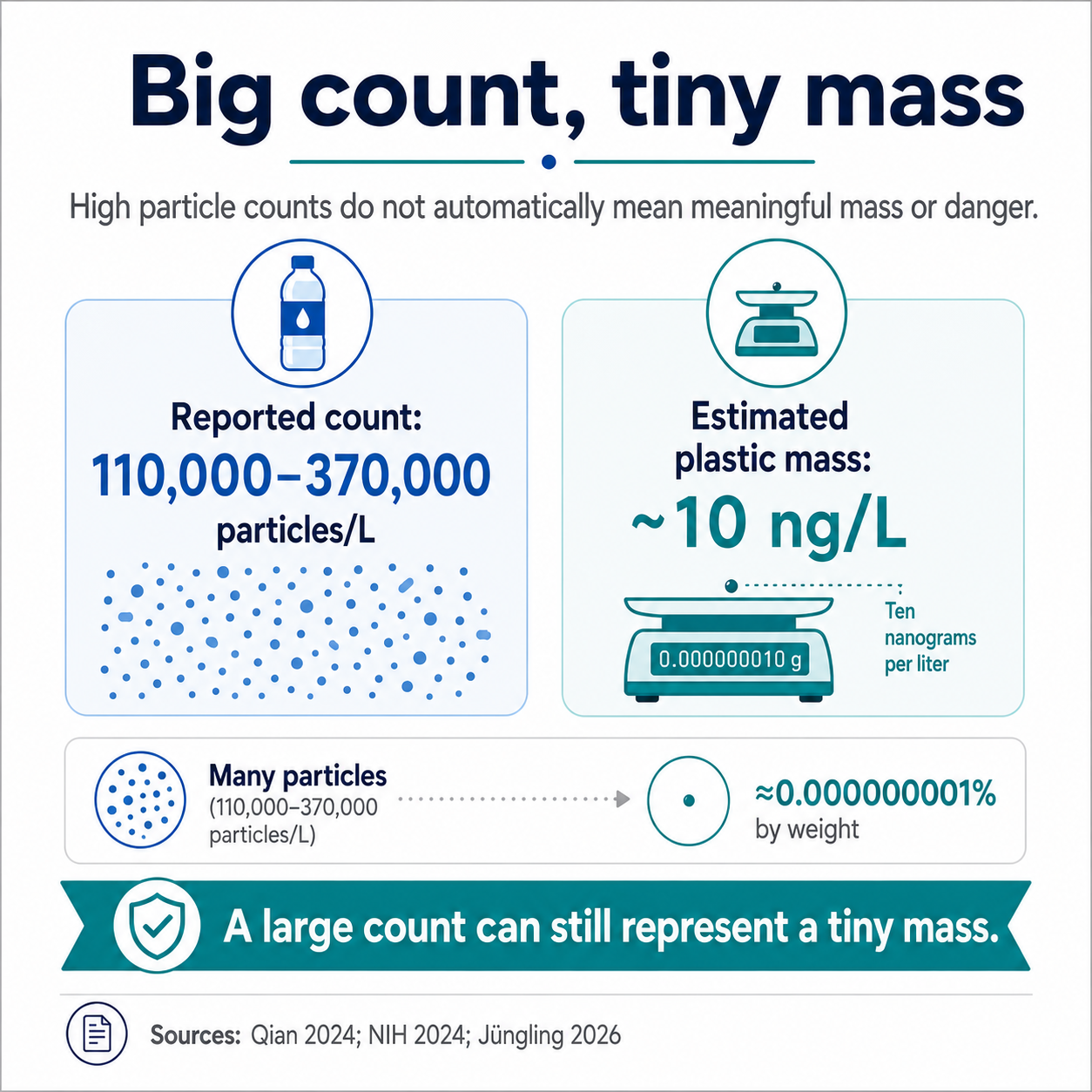
Large particle counts can represent extremely small mass, especially when particles are very small. Risk depends on dose, not headline particle numbers alone.
5. Context matters
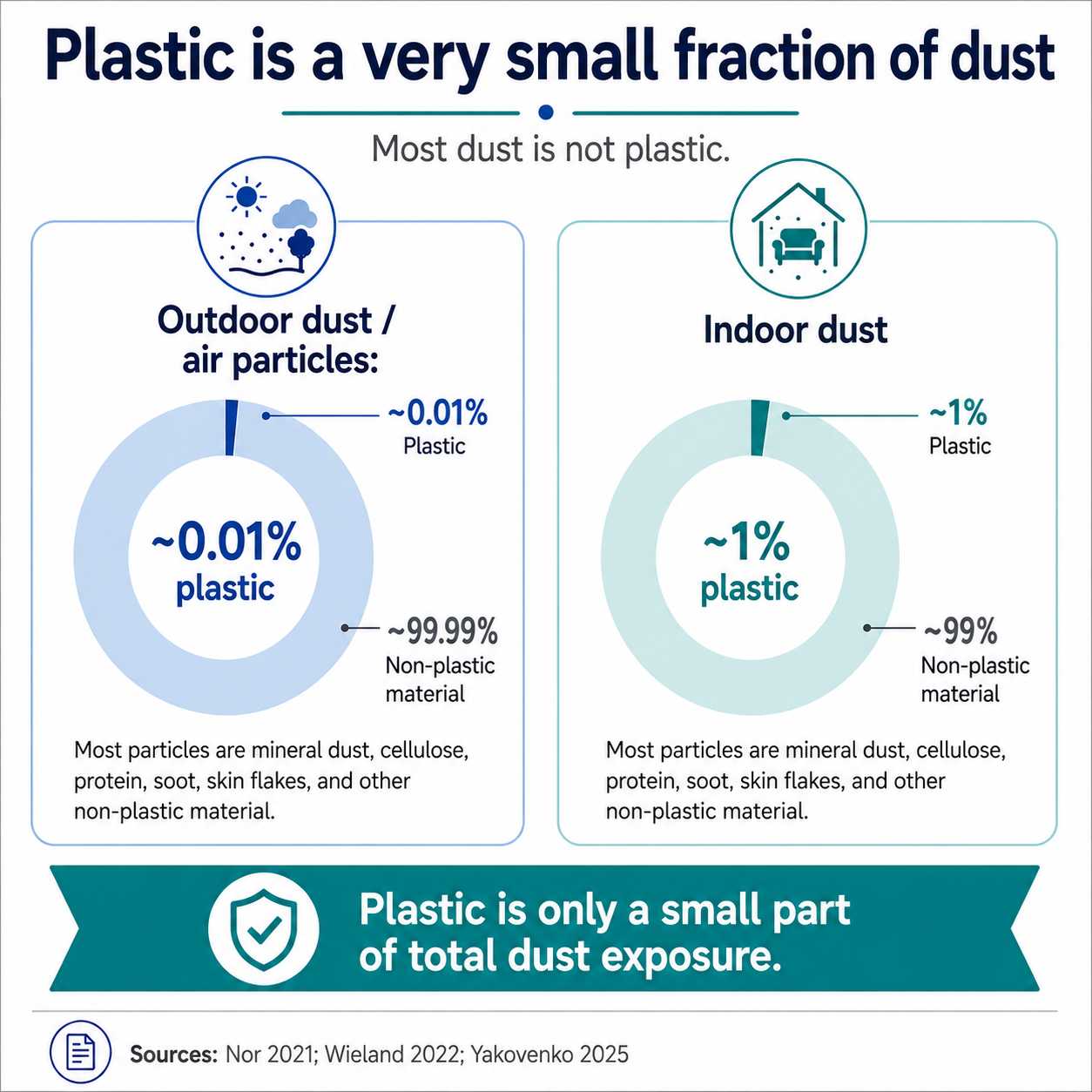
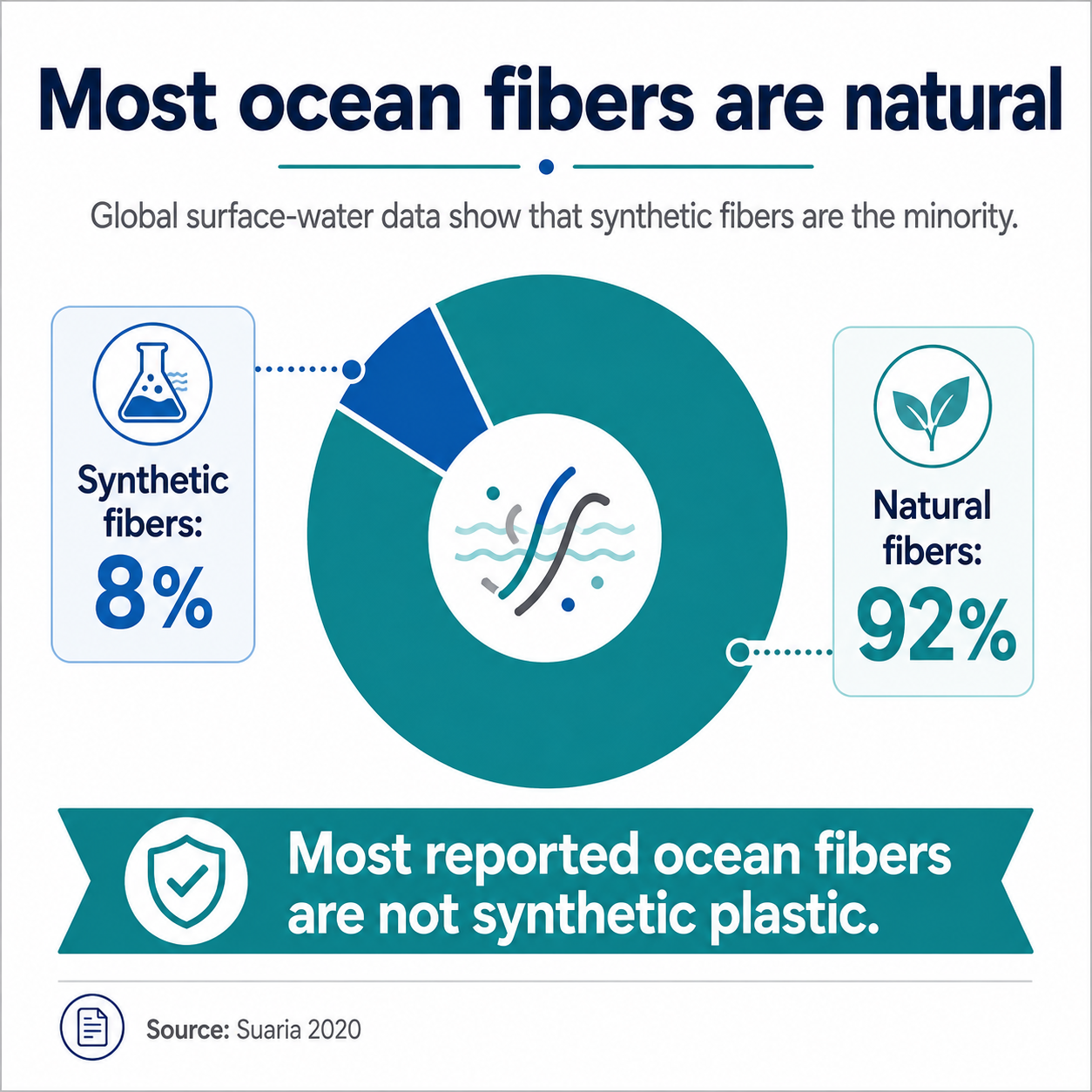
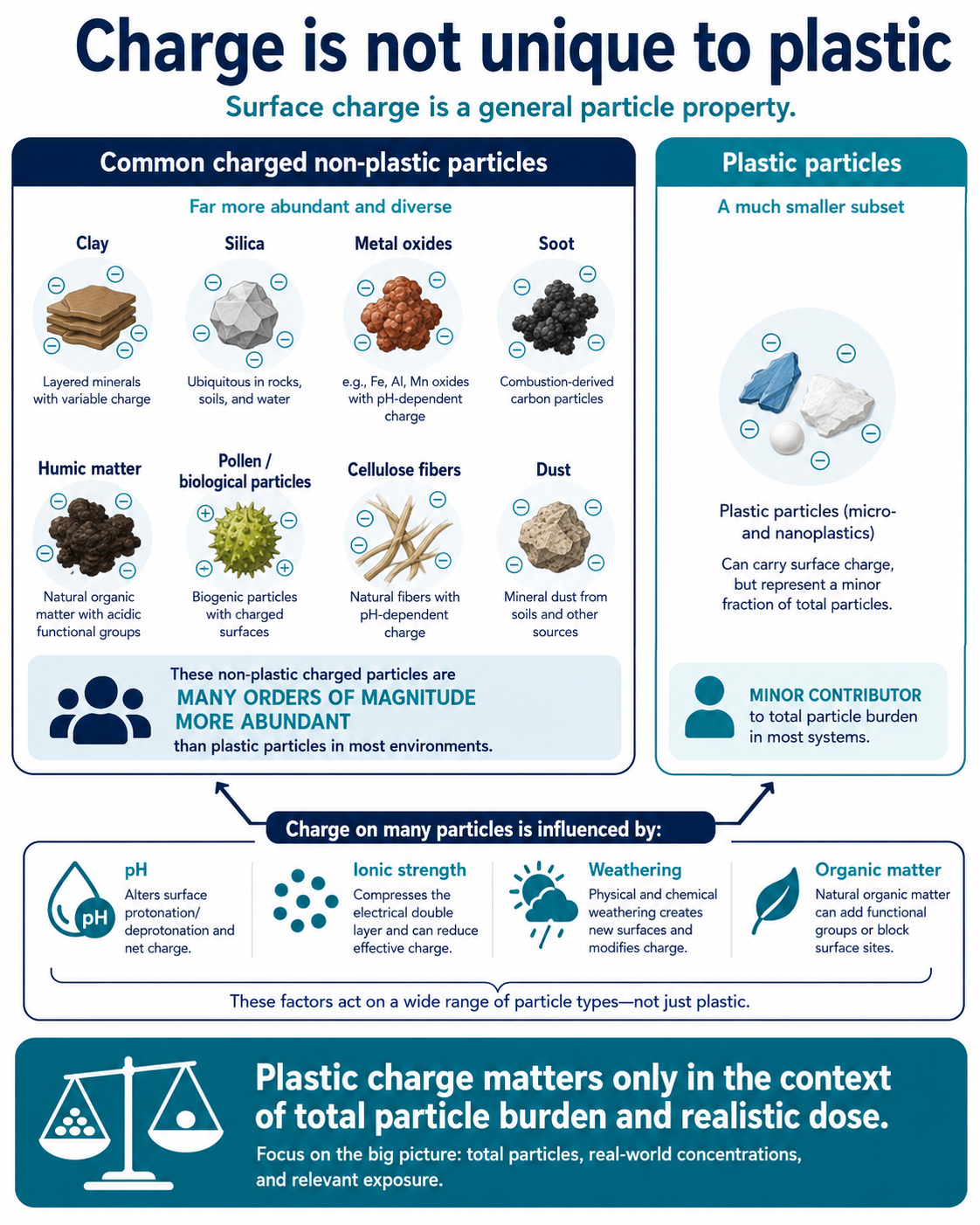
Plastic particles are only one subset of total particle exposure, which also includes mineral dust, cellulose, soot, pollen, fibers, skin flakes, food particles, metals, glass, ceramics, and biological debris.
The three questions every microplastics claim must answer
1. Was the particle actually proven to be plastic?
A plastic-like signal, dye-stained particle, weak spectral match, or chemical fragment is not always proof of an intact plastic particle.
2. Was the dose realistic?
A high-dose laboratory exposure is not proof of normal human risk. Exposure science requires realistic dose, route, duration, particle type, particle size, and biological availability.
3. Was harm actually demonstrated?
Detection is not disease. Association is not causation. A possible exposure pathway is not proof of harm.
Particles are not the same question as chemicals
Microplastics are solid particles. Claims about BPA, phthalates, PFAS, monomers, oligomers, pigments, leachables, or dissolved chemicals are separate chemical-exposure questions.
Those questions should be assessed on their own evidence. They should not be used as proof that ordinary plastic particles cause disease.
What this review does not say
This review does not argue that litter is acceptable. It does not argue that plastics should be wasted. It does not argue that every polymer, additive, product, particle size, or exposure scenario is identical. It does not argue that weak studies should be ignored because their conclusions are inconvenient.
It argues that claims about human health risk should be judged by the same standards used in toxicology, exposure science, analytical chemistry, and risk assessment.
What this review examines
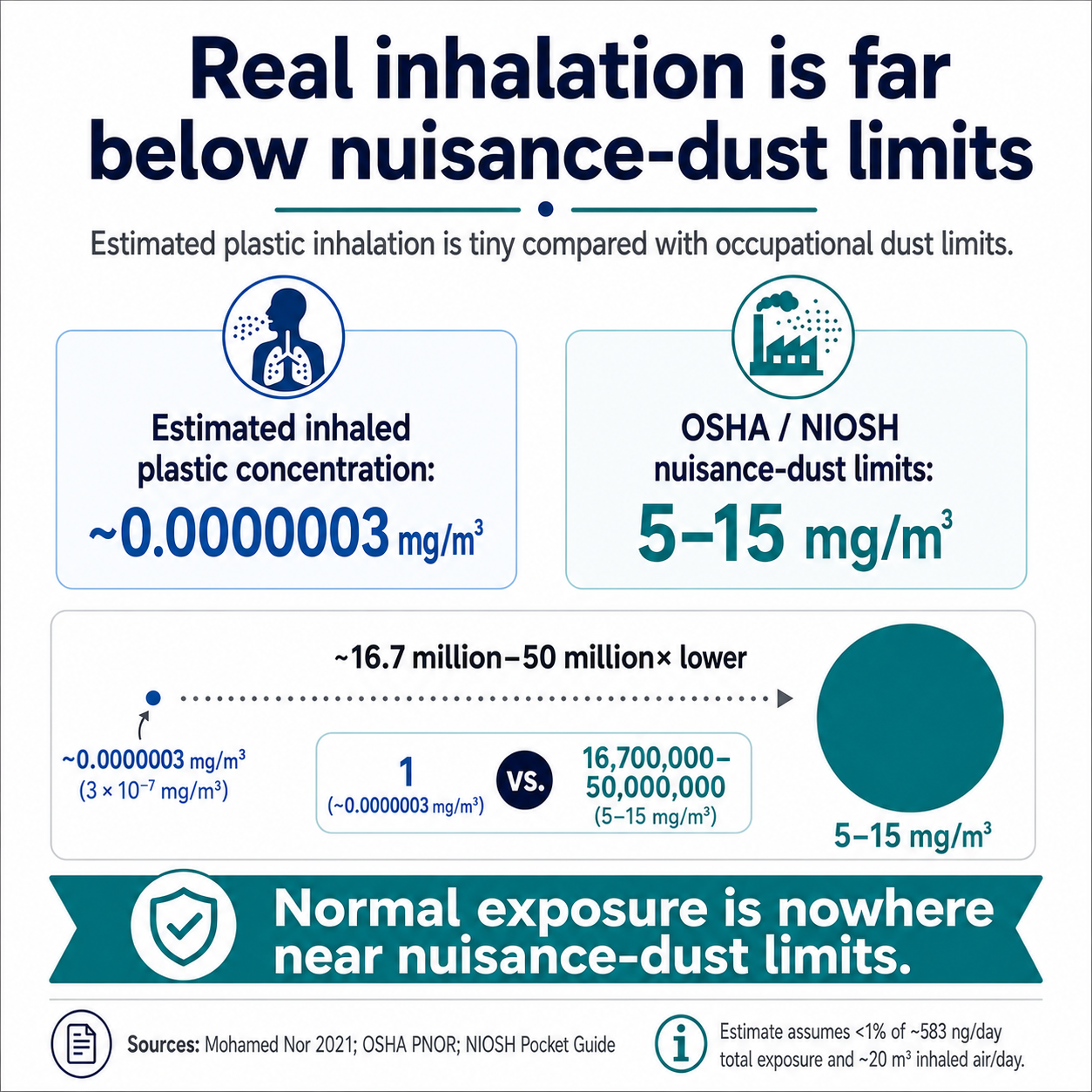
Real-world human exposure from air, dust, food, and drinking water.
How particle counts translate into mass and dose.
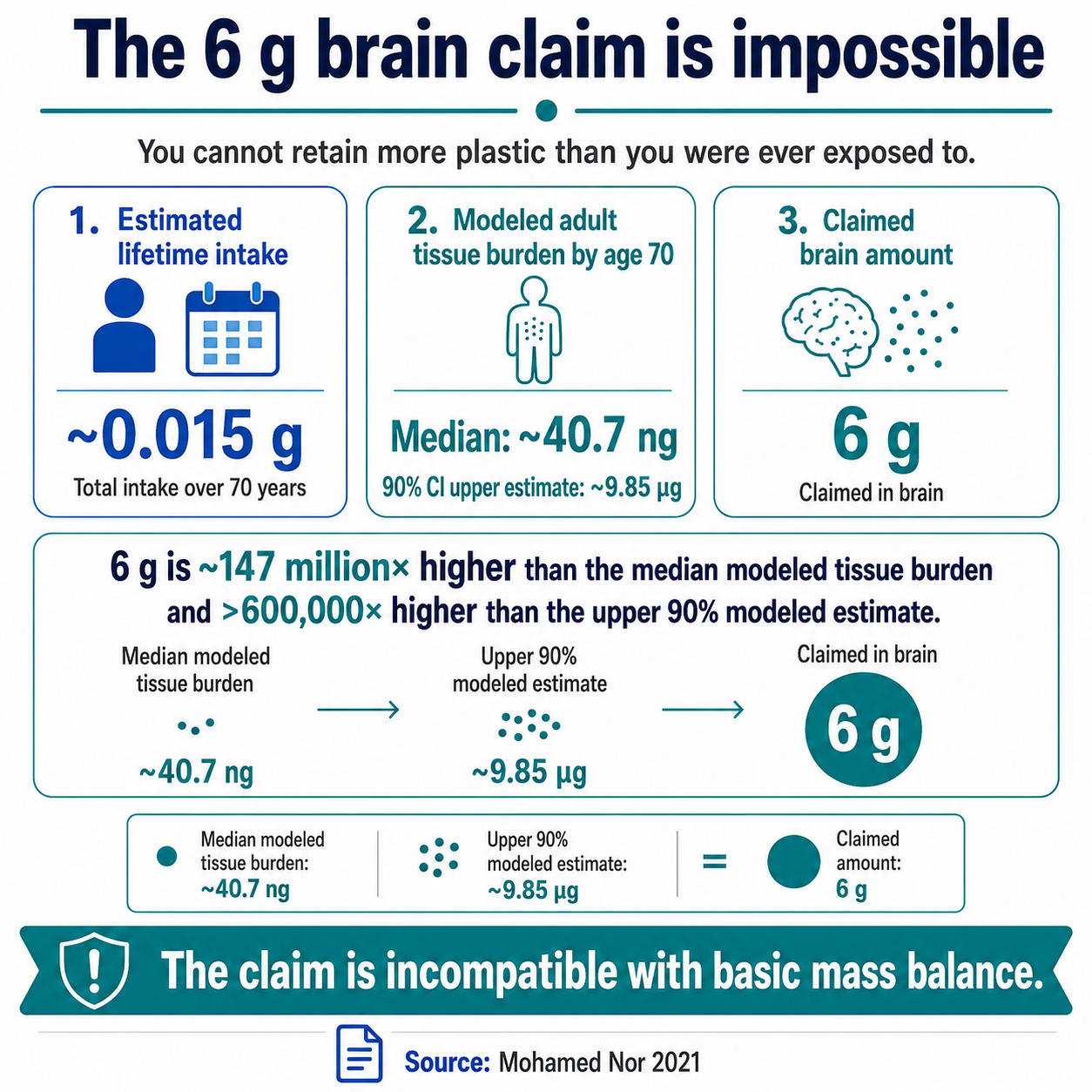
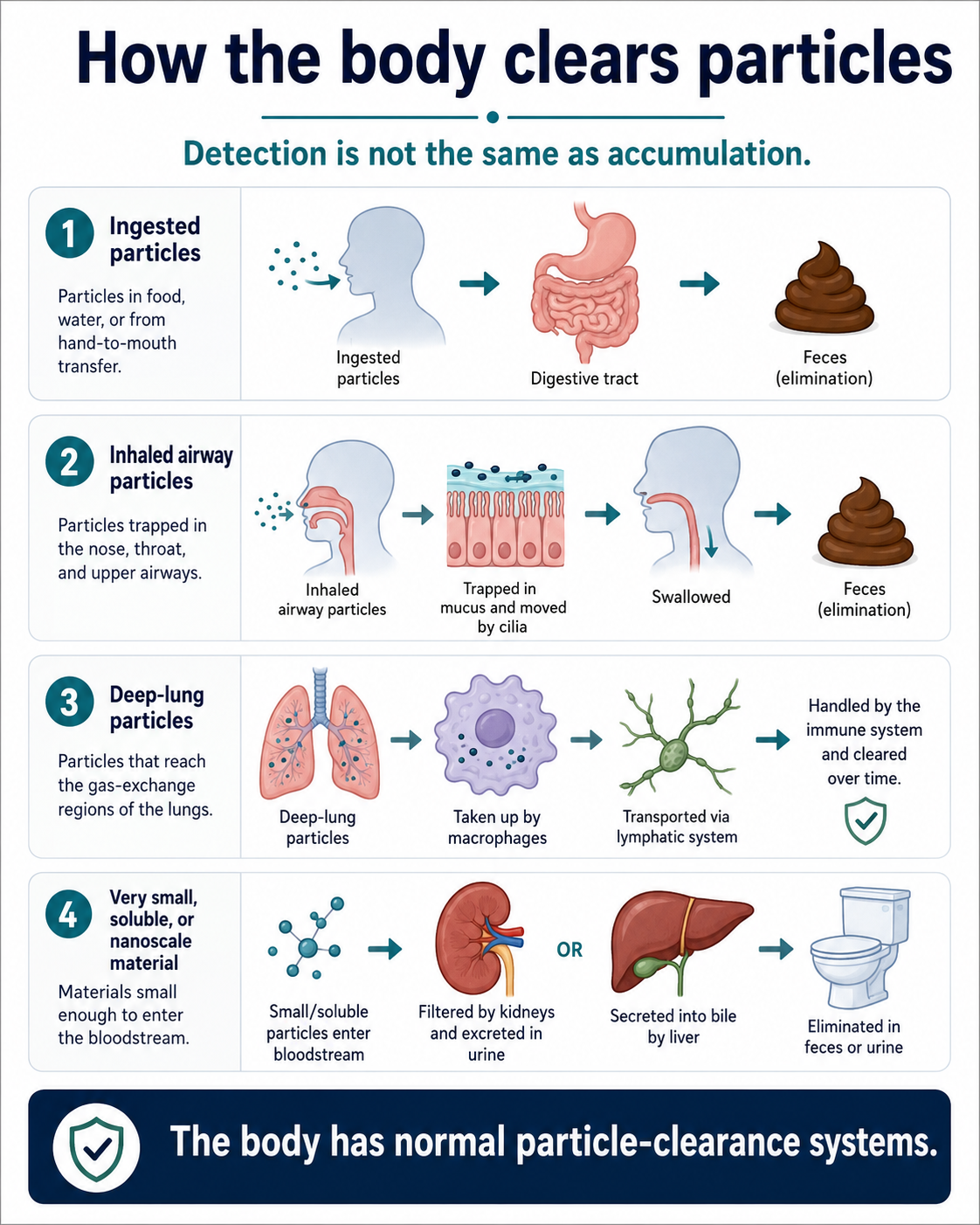
How the body clears particles and why accumulation claims require mass-balance checks.
Which analytical methods can reliably identify plastic particles, and where false positives can occur.
How laboratory toxicity studies compare with realistic human exposure.
What studies of blood, organs, placenta, brain, testes, food, water, textiles, and dust actually prove.
How microplastic claims should be graded using normal toxicology, exposure science, and risk-assessment standards.
A name change did not create a new science
Plastic particles did not become a new scientific phenomenon when the word microplastics became popular. Studies of plastic dust, polymer particles, fibers, fragments, wear debris, and inert particulate exposure existed for decades before the modern term microplastic was coined.
The label changed. The science did not.
Reviewed for scientific accuracy
The Microplastics Evidence Review was examined by independent scientific and technical experts with relevant experience in toxicology, medical toxicology, polymer science, materials science, engineering, life-cycle assessment, analytical methods, and related fields.
Reviewer participation does not imply institutional endorsement unless explicitly stated. No reviewer received funding.
Funding and independence
The review was prepared without external funding or influence. No company, trade association, advocacy organization, donor, or government agency controlled or influenced the content, conclusions, source selection, evidence grading, wording, or publication decisions.
The purpose of the review is scientific clarification: to separate what has been shown from what has been assumed, amplified, or inferred beyond the evidence.
Read the full evidence review
The full report includes evidence grading criteria, exposure estimates, method limitations, human-body claims, food and drinking-water claims, dust and textile exposure, disease and health-outcome claims, agency context, common myths, selected sources, and a completed evidence-audit table.